How to cool your home without building work: every option
If you rent, your building won't allow anything on the facade, or you simply don't want to drill, you still have options. Here's what to expect from each one.
By the ClimaEasy team. Updated
This guide may contain affiliate links. If you buy through them, we earn a commission at no extra cost to you. Learn more.
Summary of options
| Option | Does it really cool? | Works or permissions |
|---|---|---|
| Portable air conditioner | Yes, one room | None: hose through the window |
| Portable split | Yes, with less noise | No drilling, according to manufacturers |
| Air conditioner with no outdoor unit | Yes | Two holes in the wall: that's building work |
| Fan | No: it makes you feel cooler | None |
| Evaporative cooler | A little, and only in dry climates | None |
| Awnings, blinds and window film | They stop heat getting in | It depends; check with your building if visible from outside |
Portable air conditioner
The simplest option: plug it in, run the hose out of the window with a seal kit and it cools one room. Its weak points are noise, because the compressor is inside, and higher running costs than a split. We cover it in depth in the portable air conditioner guide.
Portable split
A recent format that tries to combine the best of both. The indoor unit sits in the room and the outdoor unit, with the compressor, hangs from the window or balcony railing, joined by a flexible hose. According to manufacturers, it's fitted without drilling and without an installer.
- For: much less noise than a portable, because the compressor stays outside, and better efficiency.
- Against: it costs more than a portable, the window is partly taken up, and the outdoor unit is visible from the street. If your building is strict about the facade, ask first.
Air conditioning with no outdoor unit
These wall units put everything in a single indoor unit. There's no machine hanging on the facade, but they need two holes in the wall to draw in and expel air. That's building work, so if you rent you'll need your landlord's permission, and in a block of flats it's worth asking your community, because the grilles are visible from outside.
Fans
A fan doesn't lower the temperature of the room: it moves air and helps your body lose heat, which makes you feel cooler. It uses very little electricity and works well alongside air conditioning, because it lets you set the thermostat a degree or two higher without losing comfort.
- Ceiling fans: the most effective at moving air around the whole room, although they need fitting.
- Pedestal or tower fans: no fitting needed, ideal for the bedroom.
Evaporative cooler
It's often sold next to air conditioners, but it isn't one. It passes air through a wet filter: as the water evaporates, the air cools slightly, but it also becomes more humid. It only works noticeably in dry climates and with the room ventilated. In coastal or humid areas, where the muggy heat is already the problem, it adds very little.
Without appliances: keep the heat out
The most effective and cheapest approach is to stop the sun heating the home:
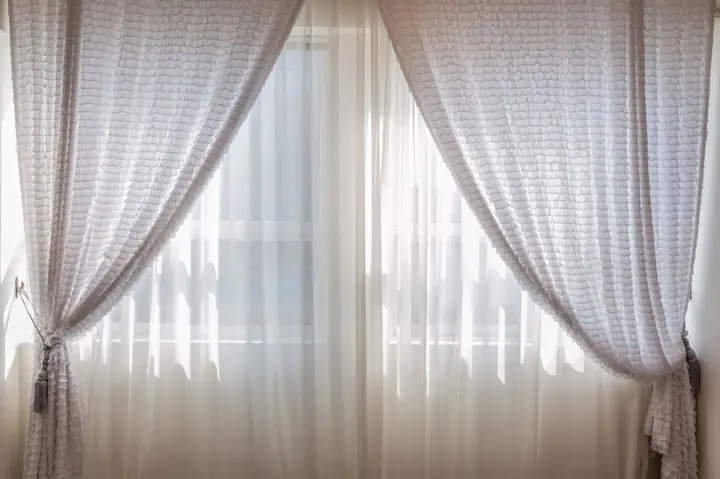
- Shade windows from outside. Shutters, awnings and external blinds stop heat before it passes through the glass; indoor curtains help, but less.
- Ventilate at night, close up by day. Open up when the outdoor temperature drops and create cross-draughts between opposite sides of the home.
- Window film. It reduces the solar radiation coming through the glass. If you rent, choose film you can remove without damaging the glass.
- Reduce heat indoors. Switch off devices on standby and avoid the oven and tumble dryer in the hottest hours.
Awnings and some external shading change the facade, so in a block of flats they may need permission. We explain it in permissions for renters and communities.
Frequently asked questions
What air conditioning can I have without building work?
A portable air conditioner, which vents its hose through the window, or a portable split, whose outdoor unit hangs from the window without drilling according to manufacturers. Units with no outdoor unit do need holes in the wall.
Does an evaporative cooler cool like an air conditioner?
No. It cools the air slightly by adding moisture, and it's only noticeable in dry climates. It doesn't replace an air conditioner in a heatwave.
Does a fan lower the temperature?
It doesn't lower the air temperature, but moving the air makes you feel cooler. Combined with air conditioning, it lets you raise the thermostat and save energy.